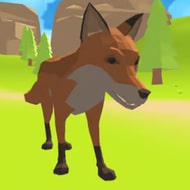
You wake up near the river in Fox Simulator 3D with low energy, a small den, and no pack members, which matters more than most players expect during the first ten minutes. The opening hunts against rabbits and deer look simple until your stamina bar drains halfway through a chase and leaves your fox exposed near wolf territory. Many players rush directly toward wolves near the mountain area and lose a full family line before unlocking stronger cub upgrades. The game turns into a survival loop where food management, den defense, weather conditions, and territory movement all connect together in ways the tutorial barely explains. Once hunger drops too low, movement speed falls noticeably, and escaping predators near the waterfall becomes much harder than early players expect.
Early Survival Routes in Fox Simulator 3D
The first reliable food route usually starts near the rabbit fields close to the wooden bridge. Rabbits move unpredictably, but their escape pattern becomes readable after a few hunts because they tend to curve sharply around rocks instead of running through open grass. Players in community discussions often call this “zig tracking” because the camera movement has to match the sharp turns exactly to avoid stamina waste. The game rewards patience more than speed during the opening section, especially before sprint upgrades unlock. New players frequently burn their entire stamina bar during one failed chase and then get cornered by wolves while trying to recover near the riverbank.
By the time you reach the waterfall area, deer become more important than smaller prey because they restore more energy per hunt and provide stronger experience rewards. New players often ignore the hunger meter until their fox loses health while exploring distant terrain. That mistake becomes dangerous once bears begin roaming near berry patches and tree clusters. Bears attack slowly but hit hard enough to end low-level hunts immediately, especially during nighttime weather cycles. Survival-focused players usually return to the den after every large hunt instead of carrying excess food across long distances where predators patrol.
One detail experienced players recognize immediately is the sound cue before a wolf attack. The short growl usually appears a second before the red combat indicator flashes on screen, and longtime players instinctively dodge sideways before the attack animation finishes. Speedrunners use that moment to preserve stamina for counterattacks instead of wasting energy on panic movement. The game quietly teaches audio awareness better than most survival simulators because visibility becomes unreliable during storms and dense fog.
Players searching for fast level routes often repeat hunts near the bridge because prey respawns there consistently. Once boars begin spawning near the forest edge, efficient players rotate between deer and boars to balance experience gain with food recovery. Exploration-heavy players usually ignore this optimization and instead spend time climbing mountain paths searching for treasure chests hidden near cave entrances.
Family Growth and Cub Management in Fox Simulator 3D
The family system changes the pace of the game completely. Once cubs arrive at the den, hunting routes become shorter because leaving the area unattended increases the chance of predator attacks. Casual exploration players usually enjoy decorating the den zone and unlocking fur colors, while progression-focused players prioritize leveling cub health upgrades first because stronger cubs survive wolf raids more consistently. The game gradually shifts from individual survival toward pack coordination, and that transition surprises many players during the middle portion of the progression system.
Many players underestimate how strong pack coordination becomes after several upgrades. A higher-level fox family can overwhelm boars quickly, especially when attack speed bonuses stack together with health upgrades. The game never explains this clearly, which is why newer players often spend too many coins on cosmetic fur patterns instead of combat skills. Once multiple cubs join hunts together, enemies begin targeting different pack members, creating chaotic fights where positioning matters far more than raw attack power.
There is also a divisive mechanic the community argues about constantly: stamina recovery speed during long-distance travel. Some players enjoy the slower pacing because it encourages careful route planning and realistic movement between hunting grounds. Others think the downtime between hunts becomes repetitive after several hours, especially when traveling from the den toward the mountain caves. Forum discussions regularly describe this as “slow roaming,” and opinions remain split even among longtime players.
By the time eagle attacks begin near open terrain, cub protection becomes much harder. Eagles descend quickly and force players to interrupt hunts immediately if cubs wander too far from forest cover. Defensive players usually stay near dense trees where visibility limits aerial attacks, while aggressive players prefer open hunting grounds because larger prey spawns there more frequently.
Weather Cycles and Predator Encounters
Night conditions dramatically change visibility around the forest edge. During rainstorms, wolves become harder to spot near rocks and fallen trees because shadows blend into the environment. The reduced lighting creates tense moments when carrying food back toward the den because enemy movement becomes difficult to track until predators attack directly. The game feels completely different during storms compared to clear daytime exploration.
Territory loops — experienced players repeatedly travel between the riverbank, berry hill, and elk field because those zones create the safest balance between food income and predator density. The route looks repetitive at first, but efficient movement matters once larger animals begin spawning regularly. Returning to the same loop also helps players memorize predator spawn points and hidden terrain shortcuts near the waterfall.
Players who prefer exploration usually spend more time near the mountain caves searching for hidden treasure chests and alternate den locations. Hunting-focused players instead grind combat levels against boars because higher attack stats make bear encounters far safer later in the game. Some completion-focused players even collect every available fur color before reaching the highest combat levels.
One criticism appears frequently in community conversations about camera behavior during crowded battles. When wolves, bears, cubs, and deer gather near narrow terrain, target tracking occasionally becomes awkward. Despite that flaw, large-scale pack fights remain one of the most memorable parts of the game because survival depends on positioning, stamina control, and quick reactions instead of simple attack spamming.
Combat Timing and Advanced Hunting Patterns
Boars become the first real skill check for many players. Their charge attack punishes constant forward movement, especially if stamina drops below half. Successful hunters usually bait the charge sideways before attacking from behind while the boar recovers. The game never labels this tactic, but forum discussions often call it “circle baiting” because efficient players rotate around the target constantly during combat.
Once eagles begin appearing near open terrain, cub protection becomes much harder. Eagles attack quickly and can interrupt hunts unexpectedly while players focus on deer or boars. Defensive players usually stay near forest cover to reduce surprise attacks from above. Risk-taking players instead hunt near cliffs because elk spawns there provide larger rewards despite the danger.
The camera can occasionally feel awkward during crowded fights involving wolves, bears, and multiple family members. Even dedicated players admit that target tracking becomes messy in narrow terrain sections where rocks block movement paths. Despite that flaw, large-scale pack battles remain one of the most satisfying moments because successful hunts feel earned rather than automatic.
Late-game combat changes again once attack upgrades reach higher levels and cubs contribute meaningful damage during hunts. Players who focused heavily on stamina upgrades often move through combat encounters much faster than players who ignored mobility earlier. The difference becomes obvious during bear fights near the waterfall where positioning mistakes immediately punish slower movement.
How do players level quickly near the river area?
The fastest leveling route usually combines rabbit hunts with repeated deer encounters near the bridge. Deer provide better experience rewards, but rabbits restore energy efficiently between fights and respawn quickly enough to maintain steady progression. Experienced players often avoid wolves entirely until stamina upgrades and family support become strong enough to survive unexpected ambushes near the riverbank.
Why do cubs disappear from the den during attacks?
Cubs temporarily scatter when predators enter the den radius, especially during wolf raids or bear encounters close to the den entrance. Many players think the cub system glitches, but the mechanic actually forces quick defensive movement around the den perimeter and prevents passive defense strategies. Stronger family upgrades reduce how often predators interrupt the area and help cubs survive longer during chaotic fights.
What is the safest way to defeat bears?
Bears become manageable once stamina upgrades and pack support improve together. Most experienced players attack from the side after the bear slam animation finishes because frontal attacks often trigger heavy damage counters. Using family members to divide aggression helps prevent direct damage bursts that can instantly end a hunt near berry patches or river crossings.
Fox Simulator 3D stays memorable because the survival loop constantly pushes players between exploration and protection instead of letting either mechanic dominate completely. Returning to the den after a long hunt while wolves circle near the river creates tension that smaller encounters never match. Even after unlocking stronger attacks, encounters with bears near the waterfall and eagle ambushes near the elk field still force careful stamina management in Fox Simulator 3D.