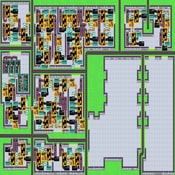
Game of Farmers looks like a relaxed farming simulation but quickly becomes a balancing act between crop production, livestock management, and long-term expansion. The game begins with a modest plot of land and a limited selection of resources, yet every harvest contributes to a steadily growing agricultural business. What makes the progression satisfying is how each new field, building, and production chain creates additional opportunities while introducing new responsibilities.
| Genre |
Farming Simulation |
| Main Focus |
Agricultural Development |
| Primary Activities |
Farming and Livestock |
| Progression |
Farm Expansion |
Building a Productive Farm in Game of Farmers
The first harvests teach the fundamentals of the farming cycle. Players plant crops, wait for growth, collect produce, and reinvest profits into farm improvements. Although the process appears simple, efficient resource management quickly becomes important as production expands.
Many beginners focus entirely on planting additional crops while neglecting storage and production facilities. This often creates bottlenecks that slow overall progress. Experienced players usually build supporting infrastructure alongside field expansion.
The game encourages gradual development rather than rapid growth. Strong foundations make later expansion significantly easier.
Relaxed players often enjoy watching fields develop over time, while optimization-focused players calculate the most profitable crop rotations and upgrade paths.
Livestock Systems in Game of Farmers
Animals introduce another layer of management. Livestock require attention, but they also create valuable products that contribute to farm income. Balancing crop production and animal care becomes one of the central challenges during the middle stages of progression.
Community discussions frequently reference “production chains” when describing advanced farm layouts. These systems connect crops, livestock, and processing facilities into efficient networks that maximize profitability.
By the time several animal enclosures operate simultaneously, planning becomes much more important. Successful farms depend on keeping every part of the production chain supplied with resources.
One commonly discussed criticism involves waiting periods associated with growth cycles. Some players appreciate the slower pace, while others prefer faster progression systems.
Expansion and Efficiency in Game of Farmers
As the farm grows, managing space efficiently becomes increasingly important. New fields, storage structures, and processing buildings all compete for available land. Poor planning can create unnecessary travel distances that reduce productivity.
Early in the game, carrying resources between locations requires little effort. Once the farm becomes significantly larger, however, layout decisions begin affecting daily efficiency. Experienced players often redesign sections of their farms to improve workflow.
Production flow becomes one of the most important advanced concepts. Every crop, animal product, and processed good moves through multiple stages before generating income.
A recognizable moment for longtime players occurs when multiple harvests become ready simultaneously. Proper preparation turns that situation into a profitable opportunity instead of a logistical problem.
Long-Term Agricultural Growth
Later stages emphasize scaling operations while maintaining efficiency. Expansion creates greater earning potential, but it also increases the complexity of daily management. Successful players learn how to balance growth with organization.
Completionists often enjoy unlocking every available building and production option, while management enthusiasts focus on creating highly efficient farm layouts. The game accommodates both playstyles naturally.
Another frequently searched topic concerns whether crop production or livestock generates better returns. Extended play demonstrates that combining both systems usually creates the strongest long-term economy.
What should players upgrade first?
Infrastructure upgrades that improve production efficiency often provide the greatest early benefits. Better storage and support buildings help existing operations perform more effectively before major expansion begins.
Why does farm growth sometimes slow down?
Bottlenecks frequently occur when production chains become unbalanced. Excess crops without sufficient processing capacity can reduce efficiency. Monitoring every stage of production helps identify these problems quickly.
How can players earn resources consistently?
Diversifying income sources through crops, livestock, and processing facilities generally creates the most stable economy. Farms that depend on only one activity often progress more slowly than farms with multiple interconnected systems.
Game of Farmers succeeds because growth always feels connected to player decisions rather than simple accumulation. Whether managing livestock, organizing harvest cycles, or optimizing production flow across expanding fields, Game of Farmers continually rewards careful planning and long-term thinking.